LFC.SUpporters
You'll Never Walk Alone
ThisIsAnfield.com


Victor Munoz “had Dani Carvajal running through treacle!” – Expert’s transfer verdict
Victor Munoz boasts qualities that have Liverpool fans excited for what is to come, and a Spanish football correspondent highlighted just how impressed he has been with the winger.
With Munoz’s transfer coming out of the blue, there has been the inevitable scramble to find his best bits on YouTube, read all about his road to Liverpool and learn everything there is to learn about Liverpool’s new attacker.
While the transfer may have been a surprise for supporters, those who have watched him over the last season knew he had the potential to make the jump from Osasuna.
To find out more about Munoz, we spoke to Spanish football correspondent Ruairidh Barlow (@RuriBarlow)…
First off, give us a quick rundown on Victor Munoz[embedded content]
I think the first thing about Victor Munoz is that he really jumps off the screen; he’s kind of turbo mode.
He looks kind of like a roadrunner. His legs kind of move at a different speed to everyone else, so that kind of electric pace is the first thing that you’ll notice about Victor Munoz.
He is a winger who kind of came through the system at Barcelona originally, then kind of got dropped by them, went to a Catalan club called Damm and came through the youth system at Real Madrid eventually.
He threatened to get his big chance last season at the end of it under Carlo Ancelotti, but ended up getting a move to Osasuna.
This season, he’s been kind of one of the breakout stars and one of the most exciting players to watch in La Liga, and that has ended up getting a place at the World Cup with Spain.
I think he’s a player on a very upward trajectory.
What position does Victor Munoz play?
For the most part, he tends to operate off that left-hand side. He’s a right footer so he tends to cut in onto that right and look for the shot, or go around the outside and get a cross in.
But yeah, he is quite versatile in the sense that he’s played on the right side as a youngster. He played on that right wing on his natural foot as well.
For Osasuna, he’s been kind of used as a second striker at times as well. They tend to use a big No. 9 so sometimes he’s kind of been playing in behind or off that striker.
But yeah, most of his good work comes off that left-hand side.
What style of player is Victor Munoz?
I’d say he’s an out-and-out winger. I’d say that’s kind of his main brief and maybe that kind of goalscoring instinct is something that he could improve.
He’s probably not the most consistent finisher, but I think you could say that it’s very much a product of him being a younger player.
This was his first season at the elite level. It was a very good season and sometimes the numbers didn’t back that up. Bear in mind, he’s playing for an Osasuna side that were kind of mid-table for most of the season, ended up in the relegation battle, so it’s not like they were thriving either.
Munoz was one of the players who helped drag them forward and drive them into games.
But yeah, in terms of goalscoring output, that’s not something, especially early on in his career, it’s not something I’d expect to see loads from.
His kind of brief, I think, is to stretch the opposition first and foremost, and he’ll be not necessarily glued to the flank, but I think he will spend a lot of time on the touchline.
How might Andoni Iraola use Victor Munoz?
I think Munoz, for Iraola at the very least, will be on that left-wing side. I think he will be one of the players who looks to kind of go early to attack the space, especially in transition.
One of the features, as I’m sure you guys know, with Iraola is that he does like to have two out-and-out wingers; he likes to stretch the pitch a lot and I think in that sense Munoz fits what Iraola will want to do quite a lot.
What kind of winger is Victor Munoz?
There are two main facets of his game that kind of really stand out or that he’s kind of made his name with.
One of them is kind of ball to feet, attacking a defender, dribbling at them, going either inside or outside. He quite often goes on the outside, which for a right footer cutting in from the left isn’t always the case.
But I think that’s a good part of his game that he has.
And the other asset, the main asset I think he has, is that electric pace running in behind. He’s a player who is capable in that sense. And in terms of being a modern winger, being able to kind of come to the ball and to go long, which I think makes it difficult for defenders to cope with him.

And I guess if you kind of want to look at the game or the moment where he kind of enters the national consciousness in Spain, is that he was up against Dani Carvajal for Real Madrid.
Osasuna end up winning that game 2-1. Munoz plays a starring role.
It was meant to be Dani Carvajal’s coming back from injury, his bid to be in the Spain squad, but it probably ended up being Munoz’s bid to be in the Spain squad because he absolutely had Carvajal running through treacle.
I think if you get a defender that’s not quick enough to deal with him, then he can really make inroads.
Why did it not work out for Munoz at Real Madrid?
At Real Madrid, it’s very difficult to break into the team.
Carlo Ancelotti, who of course was his manager at the time, famously said, ‘I’m paid to win games, not to develop young players’.
Munoz had had his work cut out and obviously his primary position, the position he would like to play, was occupied by Vinicius Jr and probably would be occupied by Kylian Mbappe if he wasn’t there.
So the competition was just a bit too strong. I think he did get a kind of very brief chance at the end of last season (2024/25) during El Clasico. He comes on, about ten minutes to go, he has a huge chance to equalise for Real Madrid with the title on the line and he skies it.
That was kind of the first introduction that many people had to him, but I think the promising thing for him is that he kind of came back from that.
He seems to have a bit of mental strength about him. The fact that he went to Osasuna and didn’t really flinch in front of the pressure at all.
And again for Spain as well, he scored on his debut. I think that’s a good sign that he will hopefully have the kind of mental capacity to deal with the change, to deal with some adversity.
And that’s something that’s been shown throughout his career; of course, getting dropped by Barcelona initially and then making his career at Real Madrid.
So I think he’s had setbacks and I think that’s a plus for a player moving to England as a youngster.
Cody Gakpo gets 9.3 World Cup rating – Liverpool fans say “Iraola will love him”

Cody Gakpo may have toiled for Liverpool throughout the 2025/26 season, but Reds fans lauded a star turn for the Netherlands in their 5-1 thrashing of Sweden.
The winger was one of many Reds players who struggled last term, too often proving to be one-dimensional and lacking a spark.
There was a very different Gakpo on show at the 2026 World Cup on Saturday evening, however, with the 27-year-old the best player on the pitch.
Gakpo gets his second goal just seven minutes after his first! pic.twitter.com/agDALbnqe9
— Match of the Day (@BBCMOTD) June 20, 2026
That’s certainly the opinion of FotMob, who rated him at 9.3, aided by his goal involvements and having a 100 per cent shot accuracy (4/4).
He scored twice and assisted once, en route to Ronald Koeman’s side winning 5-1, as Gakpo, Virgil van Dijk and Ryan Gravenberch beat Alexander Isak, who got an assist.
These Liverpool supporters loved what they saw from Gakpo, providing their thoughts on social media.
Gakpo for Holland Gakpo for Liverpool pic.twitter.com/GfMb3hre08
— ???™? (@KayLFC05_) June 20, 2026
Shouldnt be selling Gakpo at all and I bet Iraola will love him
— Gym Guy (@A_GymGuy) June 20, 2026
Why is every acting shocked with this Gakpo display lmao
Last szn was the first time he was garbage but this is pretty much what he was doing for two years at Liverpool
— Gbemiga (@Gbemiga__A) June 20, 2026
Cody Gakpo has now scored as many goals at international tournaments as Arjen Robben ?
— barry (@BackseatsmanLFC) June 20, 2026
Genuinely always thought Gakpo is nowhere near as bad as people make out. Funny how he was scapegoat all season but certain others were apparently just victims to Slot ?????????
— R8 ?? (@Nabyllionaire) June 20, 2026
Gakpo scoring two goals after we done signed munoz pic.twitter.com/J425uD6kuf
— ?ahman? (@Ra__mmi) June 20, 2026
International tournament Gakpo genuinely up there with R9 and Zidane
— Yakob ?? (@yakobper90) June 20, 2026
Watching every single Liverpool player look better without Arne Slot around… pic.twitter.com/MqQV6II6Bx
— Henry Jackson (@HenryJackson87) June 20, 2026
A genuinely funny footballer. No one will me convince me that he’s anything other than broadly a bit crap and then he rocks up to the world stage and looks like he’d fit in to that Brazil 1982 side.
— Phil Blundell (@PhilBlundell) June 20, 2026
You need to keep Gakpo even if he’s isak’s back up until Ekitike is ready to play again
— Gbemiga (@Gbemiga__A) June 20, 2026
This was a reminder of what Gakpo is capable of, with his finishing, pace and directness all too much for Sweden to handle.
As one supporter mentions above, he was arguably made a scapegoat at times last season, but how much of that is down to Arne Slot and his use of him?
It is no coincidence that so many Liverpool players are performing better at the World Cup than they did in 2025/26.
Gakpo shouldn’t be a guaranteed starter for the Reds, but he showed against Sweden how effective he can be, taking his goal tally to 23 for his country.
Isak won’t be looking forward to a reunion at the AXA Training Centre next month!
Andoni Iraola is great news for Liverpool youth after Slot’s academy apathy
Andoni Iraola‘s arrival will give Liverpool’s academy prospects a much-needed boost after Arne Slot was accused of overlooking the club’s young talent.
What did for Arne Slot? The now infamous end-of-season review conducted by Richard Hughes and Michael Edwards will no doubt have been exhaustive.
In surveying the wreckage, Liverpool’s hierarchy will have pored over the data to determine just how far mitigating circumstances went to explain the dross served up across the 2025/26 season.
Given the apparent about turn, however – the Dutchman’s sacking came in the wake of various press briefings that he was here to stay – supporters have naturally speculated on what exactly forced their hands.

Were the analytics that damning? Did audible and growing discontent in the stands leave FSG with little choice? Had Mo Salah‘s Instagram intervention proven the head coach had lost the dressing room?
Those running the show at Anfield (and in Boston) pride themselves on being the smartest people in the room. As such, it is likely a combination of those factors and more convinced them, reluctantly, that change was required.
One area largely overlooked by pundits is the recent abandonment of youth.
Indeed, amid the fallout one line from journalist David Lynch was somewhat lost amid the noise. Writing on his Substack, the reporter revealedL “Academy staff were privately sharing frustration that Slot did not seem to be immersing himself in all things Liverpool, rarely paying attention to goings-on there.”
The numbers, as well as the eye test, certainly back that assertion.
Why Arne Slot didn’t pick young players
From the very start of his tenure Slot seemingly had no interest in blooding youngsters, overseeing a brutal cull that first summer. This was in stark contrast to his predecessor, who had famously won the League Cup with a team consisting largely of GCSE students.
Admittedly, it’s never as simple as just throwing in the kids. Liverpool exists to win trophies and Slot certainly understood that assignment, stating on several occasions how high the benchmark was to play both in his team and at this level.
While nobody would (or did) question high standards when the going is good, a seeming disinterest in the academy became another stick to beat the manager with once that Midas Touch deserted him.
Young LFC Academy Products: Starts Under Slot Jarell Quansah 13starts Rio Ngumoha 10starts Trey Nyoni 4starts Tyler Morton 3starts James McConnell 2starts Calvin Ramsay 1start Kieran Morrison 1start Vitezslav Jaros 1start Jayden Danns 1startWhile form can fluctuate, a pathway to the first team should remain constant at a club like Liverpool. Only by bringing through a mixture of local and international talent can you hope to attract the next wave.
This isn’t to say everyone training under the watchful eye of Academy Director Alex Inglethorpe will go on to play at the very highest level.
Make no mistake, for every Trent Alexander-Arnold there is a Jon Otsemobor, but there should always be opportunity for the former to stake their claim.
How else can you hope to beat out competition from the likes of Everton and both Manchester clubs when scouring the local catchment area? Perish the thought but the next Gerrard could easily commit to our blue brethren if he and his advisors consider the path to Anfield blocked.

If approached correctly and sensitively, though, the brightest talents can still be attracted. Moreover, those progressing through the ranks but ultimately falling short should still earn Liverpool a transfer fee and pure profit in PSR terms.
The likes of Hughes and Edwards will naturally have that bottom line in mind and will have grown twitchy at the thought of any conveyor belt being effectively cut off.
A lack of faith in the academySo how invested was Slot in youth and how does it compare to both his predecessor and successor alike?
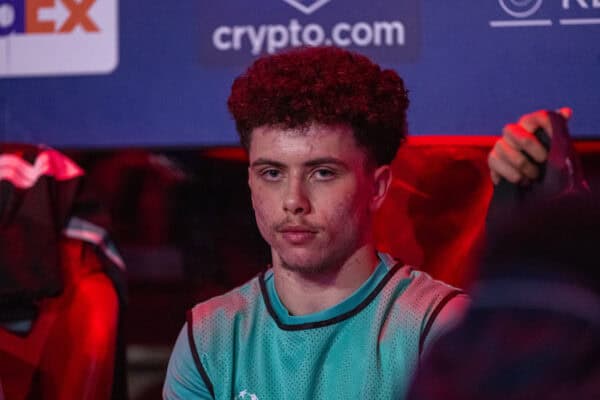
In his debut, title-winning season, the Dutchman entrusted 11 players that started the campaign aged 21 or younger. Between them, this group accounted for 104 appearances across all competitions.
For context, that is a significant drop on the previous year when Jurgen Klopp afforded 194 runouts to 16 players. This essentially equates to a 47 percent decrease.
It’s important to place the two seasons in perspective, however.
Klopp’ last dance was one that featured the Europa League as opposed to Champions League football. We also went deeper in both domestic cup competitions, winning one, which allowed/necessitated for greater rotation.
Even so, the difference is marked.

It is even more pronounced when you discount players who had already featured 10 times or more for Liverpool or in top-flight football beforehand.
Doing so shows Slot handed just 22 appearances to youngsters and nine starts. Klopp’s numbers are 100 and 58, respectively.
Given Liverpool’s limp title defence you may be forgiven for thinking these figures increased last season, but the stats reveal Slot was always reluctant to turn to youth, even when things were at their bleakest.
Indeed, the number of appearances handed to those starting the 2025/26 season aged 21 or younger actually dropped from 104 to 100.
Using the same criteria as above – discounting those with 10 or more senior appearances for Liverpool or in a top-flight division – this figure dips to 51.

While this does represent a jump on the season prior, it equates to just 12 starts – nine of which were handed to Rio Ngumoha who wasn’t so much knocking at the door as blowing it off its hinges.
The number of youth players used also dropped from the aforementioned 11 to 10.
Some may argue the quality wasn’t available to pick from, but would anybody have questioned Trey Nyoni starting ahead of the laboured Alexis Mac Allister at certain points of the campaign?
And if the pool of talent had diminished, that’s only because someone, presumably at the instigation of or at least with the blessing of Slot, signed off on the sales of the likes of Bobby Clark, Tyler Morton and Ben Doak.
Andoni Iraola’s youth development
If a distrust of youth and the long-term impact of that panicked the decision-makers at Liverpool, it’s not unreasonable to think they would consider any new manager’s penchant for blooding youngsters before settling on a preferred candidate.
In Iraola, they have found someone far more prepared to trust the next generation.
Again, caveats apply. The incoming Spaniard oversaw year-on-year progression at Bournemouth but was never competing for the title, nor in Europe.
With Premier League survival comfortably secured in his first two campaigns, it’s reasonable to posit that he had more opportunities to experiment come the latter stages of two of his three years on the south coast.
Still, the numbers make for interesting reading, with the Basque coach clearly setting his stall out from the off.
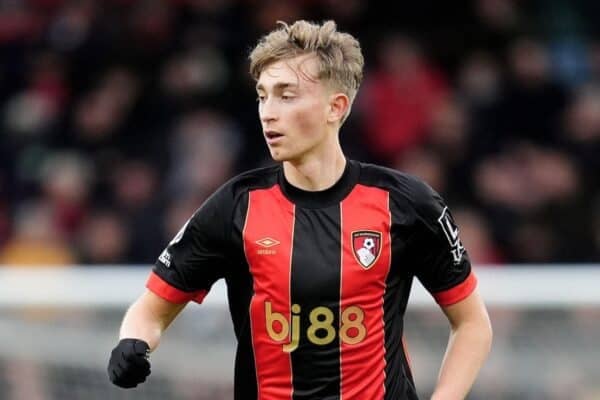
In his maiden year in England, Iraola used seven players aged 21 or younger at the start of the season.
Moreover, 143 appearances were awarded between those seven players, including 97 starts. Seventeen of those starts were also handed to players yet to amass 10 senior top-division outings.
Come year two, Iraola’s trust grew further. Appearances for those 21 or younger rose to 213 and starts to 147. As a comparison, Slot’s numbers were 104 (-109) and 42 (-105) respectively.
Fast forward to last season and there was a slight decline, due in part to players Iraola handed debuts to maturing beyond the age of 21.
Still the Spaniard picked his kids 153 times compared to Slot’s 100, and he gifted 107 starts against Slot’s 51. It’s also worth remembering that in each season, Bournemouth played an average of 14 games fewer than the Reds.
Striking the right balance
Placing your trust in youth isn’t without risk but it can prove a lightning rod for a season.
Whereas Liverpool toiled and looked in desperate need of an injection of pace and exuberance (Rio aside), Bournemouth were earning plaudits for their energetic press and attacking verve.
One side forged an identity while the other were going through an identity crisis.
Such was the job Iraola did at Bournemouth that talent he nurtured has either departed for big money or appears destined to.
The development of Ilya Zabarnyi, Dean Huijsen, Milos Kerkez and Antoine Semenyo will not have gone unnoticed at Anfield, nor will the potential of Junior Kroupi and Rayan.
A track record of bringing through youth prospects isn’t the be all and end all. Iraola is smart enough to realise he will be judged on silverware, but who is to say we can’t have both?
Graham Potter admits Alexander Isak fitness ‘not maximum’ but “will get stronger”
Alexander Isak is “not at his absolute maximum,” Sweden manager Graham Potter has admitted, but he will “get stronger and stronger as the tournament goes” on.
Since heading off on international duty with Sweden, Isak has started to look more like the player Liverpool signed from Newcastle.
After scoring against Norway in a warm-up match, the 26-year-old followed it up with a similar strike in the 5-1 win over Tunisia that kicked off their World Cup campaign.
Next up for Sweden is a match on Saturday, June 20 against the Netherlands, as Isak faces Liverpool teammates Virgil van Dijk, Ryan Gravenberch and Cody Gakpo.
The No. 9 should again start again alongside Arsenal‘s Viktor Gyokeres up front, but coach Potter has admitted Isak is still not at the very top of his game, though this could change.

Asked if missing games for Liverpool could mean Isak is fresher for Sweden, Potter replied: “I think you have to take every player and assess them in their own way.
“Like you said, there’s a different game load for every player. Alex has had a season that has been interrupted.
“Most footballers would probably say they need a certain amount of time and games to get up to top, top level, so we’ve had to try to build Alex up.
“I think there’s more to come from him. He’s not at that place where he’s at his absolute maximum, but obviously with the quality he has and the type of player he is, he can still influence the game.
“I think he’ll get stronger and stronger as the tournament goes and that’s where our work is, to try and help him get stronger and stronger, better and better.
“If he’s enjoying his football, that’s the most important thing I think with Alex. I think he likes being in the team, he likes being with the players, he likes being part of the national team.
“He enjoys it, he plays with a smile on his face, and if we do that then he’s fantastic.”
Isak’s struggle for form at Liverpool
As we all know, Isak didn’t exactly live up to the £125 million fee Liverpool spent last summer.
That isn’t all his fault – a broken leg halfway through the campaign didn’t help – but even when Isak was on the pitch, he looked far from sharp.
Potter isn’t worried about the striker, though, explaing: “You have to find a way of learning about each other. How are they going to play and fit in?
“OK, Alex Isak playing for Newcastle, he does this, but how does he adapt to what Liverpool want him to do?
“The player doesn’t change. His quality doesn’t change. He’s still a top, top, top player.
“It is just how they interact as a team together, andd if you make a lot of changes, it can take a bit of time.

“Unfortunately, sometimes at the big clubs, the big change means big pressure and expectation – and then expectation vs. reality.
“As soon as that gap starts to become too big, you can have problems.
“His injuries have been disappointing but I know him. He’s a great, great lad; he wants to play football and wants to help his team.
“Sometimes everybody’s career can go up and down, but the quality of the person and the quality of the player is undeniable.”
Sweden vs. Netherlands kicks off at 6pm (BST) on Saturday, June 20, with UK television coverage to be broadcast on BBC One.
Liverpool “sent scouts” for World Cup defender – as Barcelona bid rejected
Liverpool scouts have been watching Australia’s highly-rated young centre-back, Lucas Herrington, who has already been the subject of a bid from Barcelona.
It has become clear that after last summer’s record signings, Liverpool are transitioning back to how they used to do business, buying young and for a relatively low fee.
Herrington is among the latest centre-backs to be linked, with the Reds already having recruited several young defenders over the last year.
Giovanni Leoni, Jeremy Jacquet, Mor Talla Ndiaye and Ifeanyi Ndukwe have all been brought into the club as part of Liverpool’s future planning.

While there is no suggestion that a move for Herrington is imminent, the Athletic report that “Liverpool sent scouts” to watch him this season.
If the Reds were to pursue Herrington, they would face competition.
The report added that Barcelona have already had a bid rejected for Herrington because it was below the valuation set by his club, Colorado Rapids.
We don’t have an exact figure of how much Herrington could cost, but journalist Tom Bogert says it is “reasonable to expect” Herrington to command a record fee for an MLS defender of over £5.8 million.
That £5.8m tag (plus add-ons and a sell-on clause) is the price for which Rapids sold then 24-year-old defender Moise Bombito to Nice in 2024.
Who is Lucas Herrington?[embedded content]
Player Profile: Lucas HerringtonFull Name: Lucas HerringtonAge: 18 (Sep 5, 2007)Height: 192cm (6’3″)Birthplace: Brisbane, Australia
Club: Colorado RapidsPosition: Centre-BackFoot: RightAustralia caps: 4
At just 18 years old, Herrington is already a part of Australia’s World Cup squad despite only ever playing for Brisbane Roar and Colorado Rapids.
He hasn’t yet got on the pitch for Australia at this summer’s tournament, but that in no way diminishes the way in which he is being talked about as one of the world’s best defensive prospects.
After playing for various smaller clubs in his childhood, Herrington’s career really began when he joined Brisbane Roar’s academy in 2019.
Five years later, he made his first-team debut at Brisbane, for whom he played 29 times before being picked up by Colorado Rapids in MLS.
He moved to America in January and has already made 17 appearances, enough to see him called up for his country by manager Tony Popovic.

While it is only now that the wider footballing world will be noticing Herrington, he has long been touted for greatness within the Socceroos’ youth system.
In fact, he played for the country’s under-17 side at the age of 15.
Ex-Arsenal defender Rob Holding, who is now Herrington’s teammate at the Rapids, said: “He’s super composed, super relaxed on the ball, under pressure.
“He’s a really good player. He just keeps getting better and better each week.”
MLS writer and This Is Anfield contributor James Nalton actually named Herrington as one of eight young players to watch at the World Cup.
“The 18-year-old Aussie went straight into the starting lineup with MLS side Colorado Rapids after joining from Brisbane Roar for the 2026 season,” the journalist wrote for This Is Anfield.
[embedded content]
“Under the Rapids’ English head coach Matt Wells, Herrington has emerged as a key part of their possession game and is second in the league for passes completed, boasting a pass success rate of 94 percent.
“His 6’3” frame makes him useful defensively too, especially in the air, although there is still room for improvement as is the case for any young defender, but the raw materials are there.
“Having initially aimed merely for a place in the squad, it wouldn’t be a surprise to see him start for Australia at the World Cup, such has been his progress and adaptation to senior football.”
Alexis Mac Allister AND Lionel Messi are subject of formal complaint to FIFA
A formal complaint has been lodged against Alexis Mac Allister and Lionel Messi by the Algerian FA, following an apparent elbow at the 2026 World Cup.
After a poor season at Liverpool, Mac Allister is looking to win back-to-back World Cups with Argentina, again proving to be a key starter.
The 27-year-old featured prominently in his country’s 3-0 win over Algeria earlier this week, which saw Messi score a hat-trick.
It was Mac Allister’s shot that led to the greatest player of all time netting his second goal of the game, and he enjoyed a strong overall performance.
Despite that, some controversy has now emerged from the match.
Mac Allister and Messi subject of Algerian complaint
The Algerian FA have, according to the Athletic, lodged a formal complaint with FIFA, following refereeing decisions that went against them in the loss to Argentina.
One of those was an elbow by Mac Allister on Ibrahim Mazan, but referee Szymon Marciniak ignored a card during the Group J clash in Kansas.
The Liverpool man received no punishment, with the same applying to Messi, who got away with a nasty-looking tackle on Aissa Mandi’s Achilles tendon.
Speaking after the match, perturbed Algeria head coach Vladimir Petkovic said: “It’s pointless commenting on hypothetical situations, but everyone saw it, including me.”
Did Alexis Mac Allister deserve punishment for elbow?
Mac Allister is certainly one of Liverpool’s masters of the dark arts, proving to be an expert at winning free-kicks and often putting his physicality to good use.
But despite this, any retrospective action would be both harsh and a surprise, with the apparent elbow not justifying punishment.
Messi’s tackle was worse by modern standards, if accidental, and it could be argued that a lesser footballer may have received a red card.
Mac Allister will no doubt continue to be a key man as the World Cup progresses, proving to be a vital part of a midfield also containing Rodrigo De Paul and Enzo Fernandez.
Next up for the world champions is a clash with Austria on Monday evening (6pm BST) – it would be a surprise if Mac Allister was suddenly banned for it.